By Sarina Gomez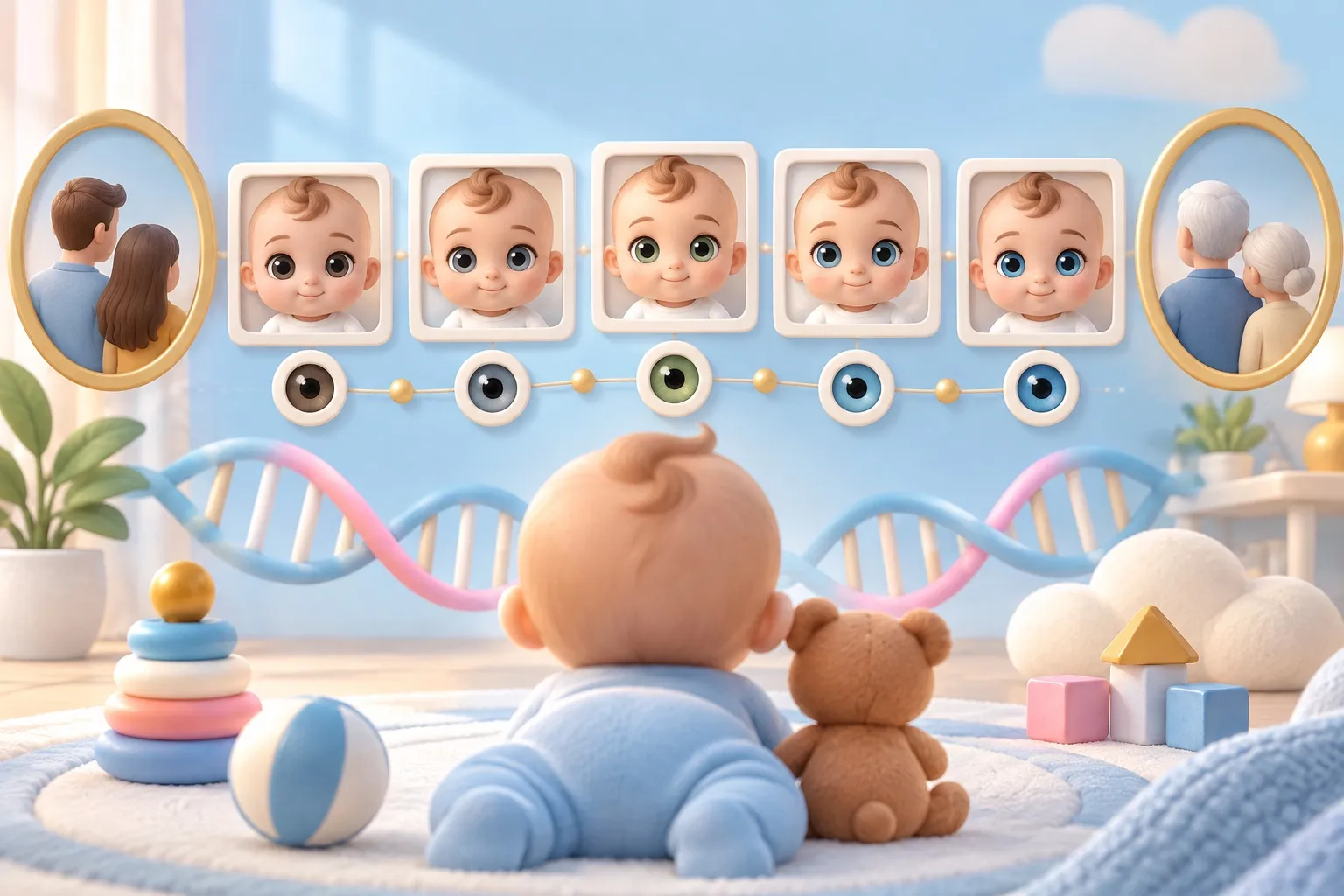
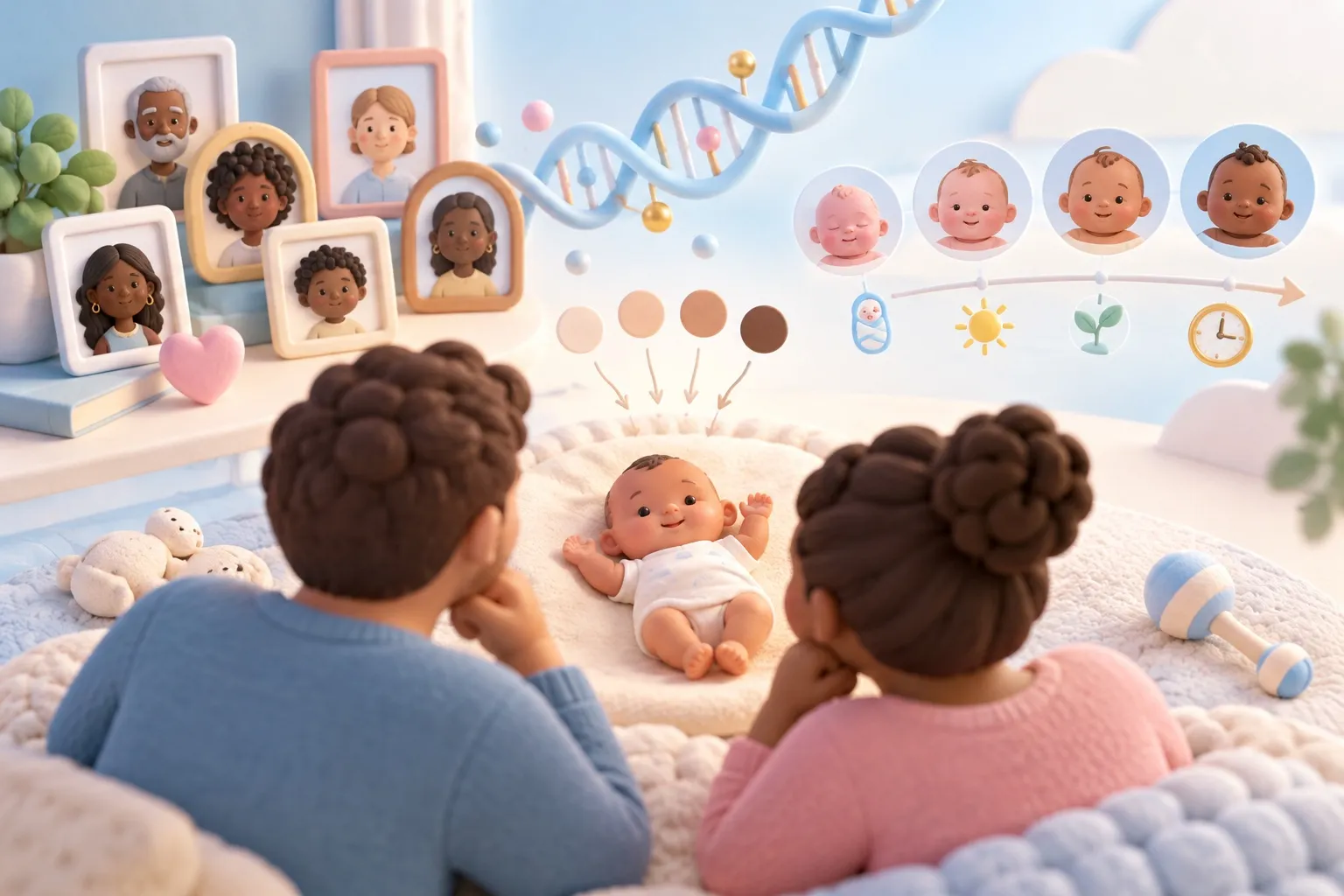
Most babies’ eye color starts changing between 3 and 9 months, often around 6 months, and the final color can take up to three years to settle, according to Cleveland Clinic. Change almost always goes from lighter to darker: blue-gray eyes may turn green, hazel or brown, while brown eyes usually stay brown. Not every baby’s eyes change at all.
Why baby eye color changes after birth
Baby eye color changes because the iris keeps adding melanin, the same pigment that colors skin and hair, during the first months and years. Brown eyes have a lot of melanin in the front layer of the iris; blue eyes have very little there, and the blue you see comes from scattered light, as Cleveland Clinic’s guide to eye colors explains.
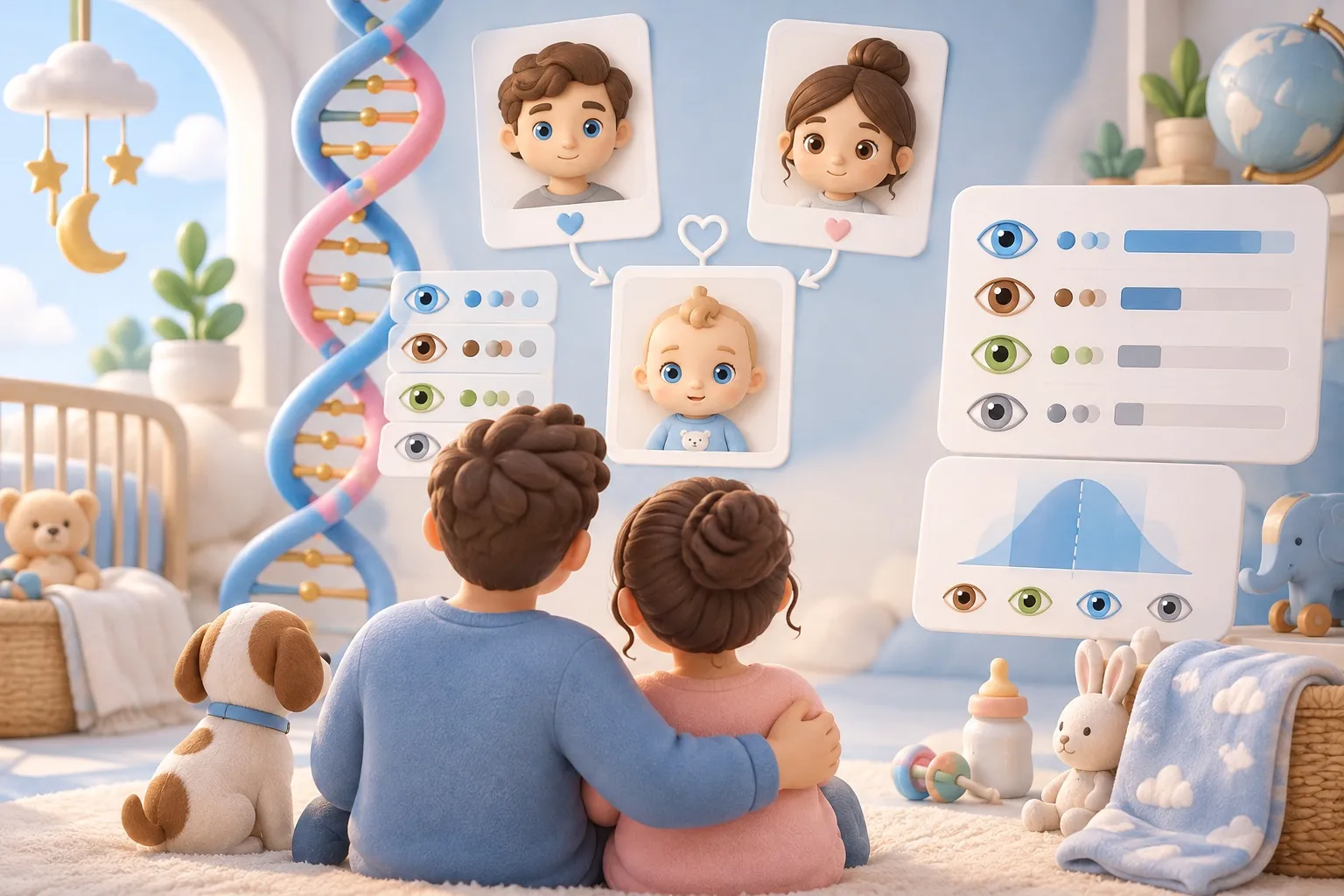
How much melanin the iris ends up making is set by genes. MedlinePlus Genetics lists 10 genes involved, led by OCA2 and HERC2. A newborn whose genes call for a lot of pigment may already have brown eyes at birth. A baby whose genes call for a medium amount may start out blue-gray and darken over months as the pigment arrives.
That’s why the direction is so predictable while the endpoint isn’t. Melanin is added, not removed, so light eyes can darken but brown eyes rarely turn blue.
Not all babies are born with blue eyes
Most babies are not born with blue eyes, despite the popular saying. A study of 192 newborns at Stanford, published by Ludwig and colleagues in 2016, found that about 63% had brown irises at birth, about 21% blue, and about 6% green or hazel; the rest couldn’t be classified from the photos. The study was done at one hospital, so the shares will differ by population, but it put the “every baby starts blue” idea to rest.
Babies born with brown eyes usually keep them, because the iris already holds plenty of melanin. The blue-to-something-else story mostly applies to babies who start with light eyes.
Baby eye color change by month
This progression is a typical pattern, not a schedule. Some babies move faster, some slower, and some never change.
| Age | What you’ll usually see |
|---|---|
| Birth to 1 month | Eyes may look dark gray, slate blue or already brown. Newborns keep their eyes half closed much of the time, so color is hard to judge. |
| 1 to 3 months | Little visible change for most babies. Light eyes can look different in daylight versus indoor light, which is lighting, not change. |
| 3 to 6 months | Changes may begin. Cleveland Clinic notes they can appear as early as 3 months. |
| 6 to 9 months | The most common window for visible change. Blue-gray eyes may deepen to green, hazel or light brown. |
| 9 to 12 months | Many babies now have a color close to their final one, but it’s still not settled for everyone. |
| 1 to 3 years | Subtle shifts can continue. Cleveland Clinic says it can take up to three years for the final color to be determined. |
| 3 years and up | Most changes are done. Cleveland Clinic’s eye colors guide says most finish by about age 6, and a small share of people see changes into adulthood. |
Cleveland Clinic also cites follow-up research in which about 1 in 3 children had a change in eye color by age 2. In other words, change is common but far from universal.
A practical tip: if you want to track it, take a photo every month near the same window, without flash, at the same time of day. Comparing indoor photos taken under different bulbs will make you think the color changed when it didn’t.
When an eye color change needs a doctor
A slow darkening during the first years is normal. A few things are not part of that process and are worth a call:
- A white pupil in photos. If a flash photo shows one pupil glowing white instead of red, the American Association for Pediatric Ophthalmology and Strabismus says the child should see an eye doctor right away. Causes include a cataract and, rarely, a tumor called retinoblastoma.
- A sudden change. Cleveland Clinic advises that any sudden change in eye color, in a child or an adult, should be raised promptly with an ophthalmologist.
- Eyes that become different colors. Two different colored eyes (heterochromia) can be present from birth. Point it out at the next checkup so the pediatrician can decide whether it needs a look.
None of these is about the normal blue-to-hazel shift. They are reasons to ask, not to worry.
Picturing your child’s eyes at age 4
By age 4, most children’s eyes have settled or are close to it, which makes it a natural age to imagine. SeeMyBaby’s 4-year-old preview shows an imagined portrait of the same child at 4, made from the parents’ photos when you have them, otherwise by ageing up the newborn portrait. It’s a one-time purchase ($4.99 in the US App Store).
The portrait is a playful look ahead, not a forecast. The app doesn’t know which eye color genes your baby carries, so the eyes in the picture are imagined from what the photos show, not read from DNA.
If you’re still pregnant and wondering what color to expect at all, our baby eye color guide explains which outcomes parents’ eye colors make likely. The month-by-month story of the whole face, from the nose to hair texture, is in when babies’ features change, and what newborns look like at birth covers the first days. Everything else is on the SeeMyBaby blog.
Sources
- Cleveland Clinic: When do babies’ eyes change color? (May 2025)
- Cleveland Clinic: Eye colors
- MedlinePlus Genetics (National Library of Medicine): Is eye color determined by genetics?
- Ludwig CA, Callaway NF, Fredrick DR, Blumenkranz MS, Moshfeghi DM. What colour are newborns’ eyes? Prevalence of iris colour in the Newborn Eye Screening Test (NEST) study. Acta Ophthalmologica, 2016. PubMed 27061128
- American Association for Pediatric Ophthalmology and Strabismus: Leukocoria
Questions parents ask
At what age is a baby’s eye color permanent?
For many babies the color is close to final by the first birthday. Cleveland Clinic says it can take up to three years to be fully settled, and a small share of people see subtle changes later.
Can brown eyes turn blue in a baby?
Normal development doesn’t turn brown eyes blue, because the iris adds melanin over time rather than losing it. A real change toward lighter or different colors should be checked by an eye doctor.
Do babies’ eyes change color from crying or mood?
No. Crying can make the eyes look brighter or redder around the white part, and lighting changes how light eyes look, but the iris pigment itself doesn’t change with mood.
How can I tell if my baby’s eyes will stay blue?
You can’t know for sure early on. Most change happens in the first year, so blue eyes that haven’t shifted by the first birthday have less time left to change, though Cleveland Clinic notes subtle changes can continue up to age 3.