By Sarina Gomez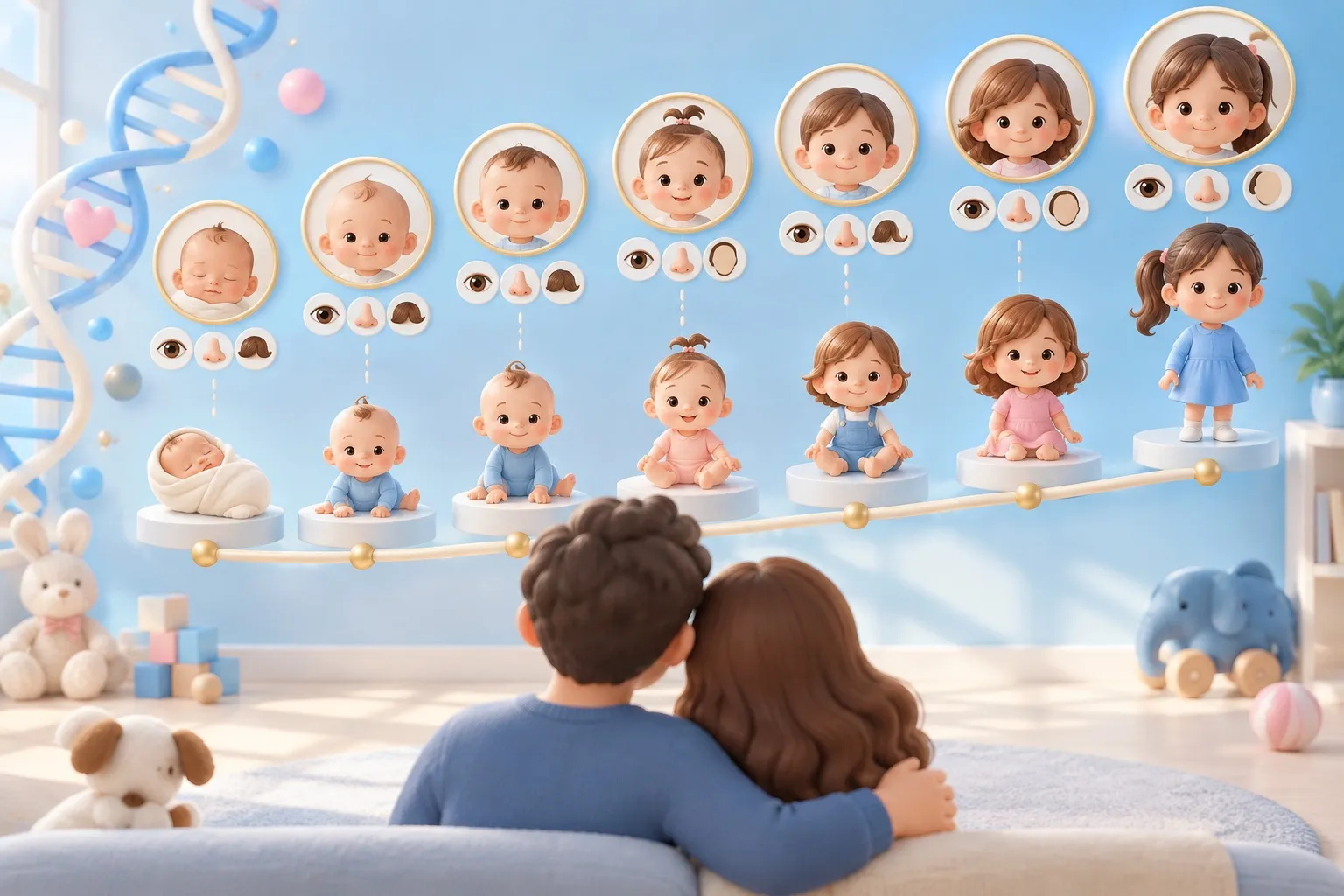
Babies’ features change fastest in the first few weeks, when birth swelling fades and the head rounds out. Over the first year the hair thins and regrows, eye color settles and the first teeth arrive. From 1 to 4 the face keeps maturing as all 20 baby teeth come in and the body stretches out, so a 4-year-old still looks like themselves at birth, just a lot less like a newborn.
Here is the timeline, stage by stage, with what changes and when.
Birth to 2 weeks: swelling fades and the head reshapes
The first features to change are the ones the birth itself shaped. A baby’s skull is made of soft plates with gaps between them, and pressure in the birth canal can mold the head into an oblong shape, as MedlinePlus explains. Babies born breech or by C-section most often have a round head from the start.
What you might notice in the first days:
- A cone-shaped or uneven head. The American Academy of Pediatrics says on HealthyChildren.org that slightly misshapen heads are common right after birth and that the skull bones almost always round out over the next several weeks.
- Swelling or bruising on the scalp. The same AAP page says it usually goes away on its own over the first days and weeks.
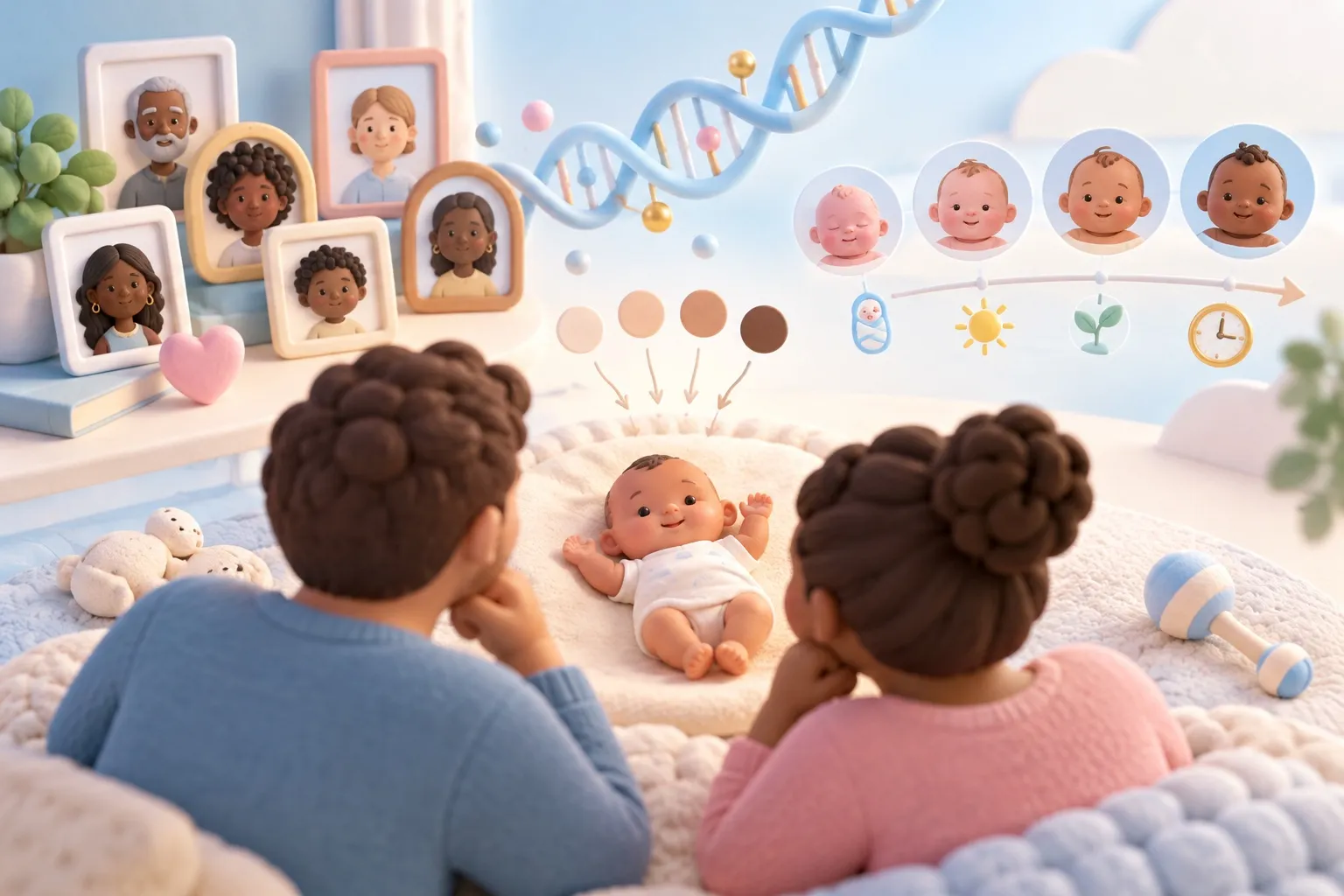
- A puffy face overall. Fluid from labor and delivery softens the features, which is one reason newborn photos from day 1 and day 10 can look like two different babies.
If you want the full first-day picture, from vernix to skin color, our guide to what newborns look like at birth covers it.
1 to 6 months: hair thins and eyes start shifting
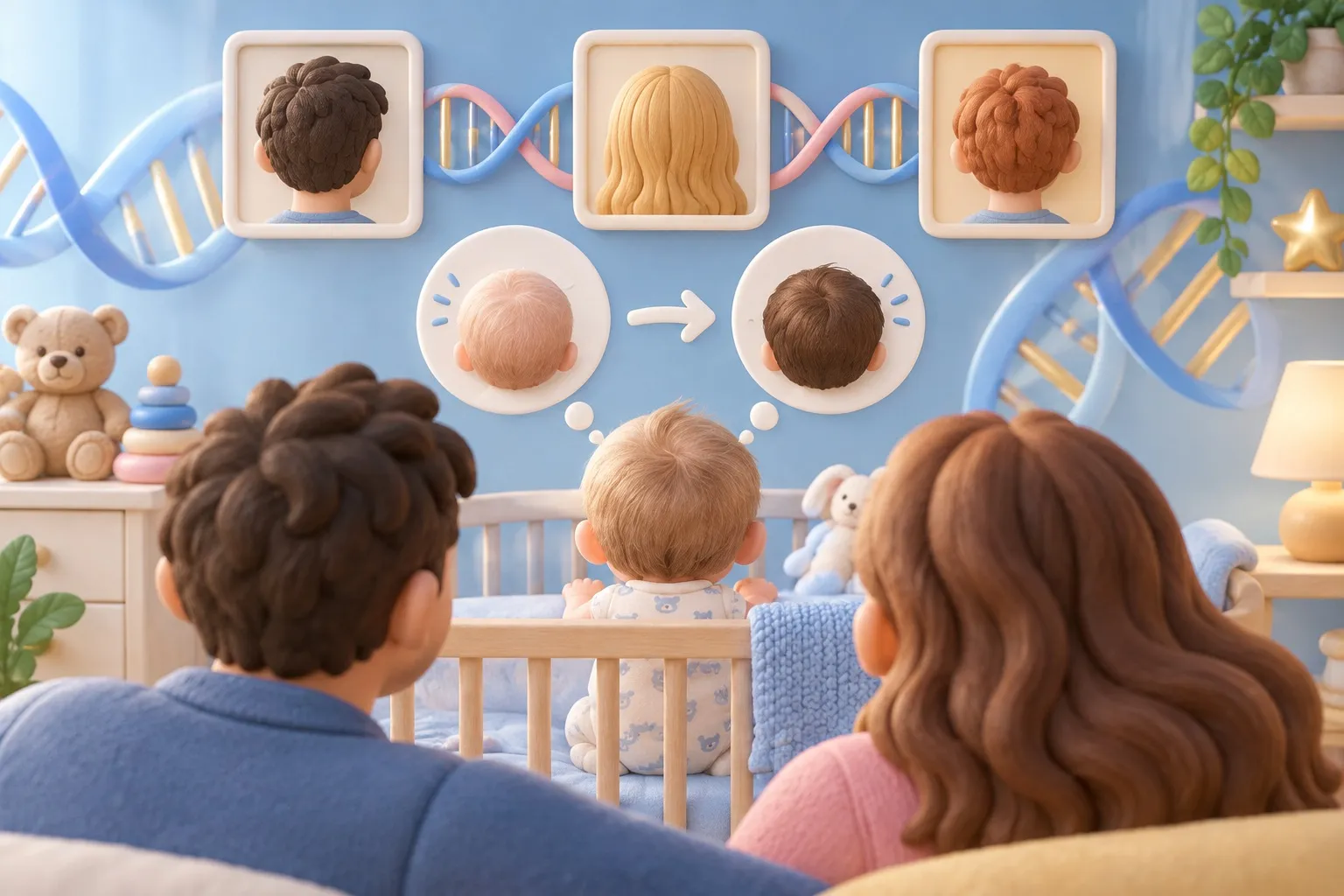
Hair and eye color are the big changes of the early months. HealthyChildren.org notes that any hair a baby is born with is likely to thin out significantly over the next few months before it is replaced with “real” hair. That second growth can come in a different shade or texture, so dark newborn hair is no promise of dark toddler hair.
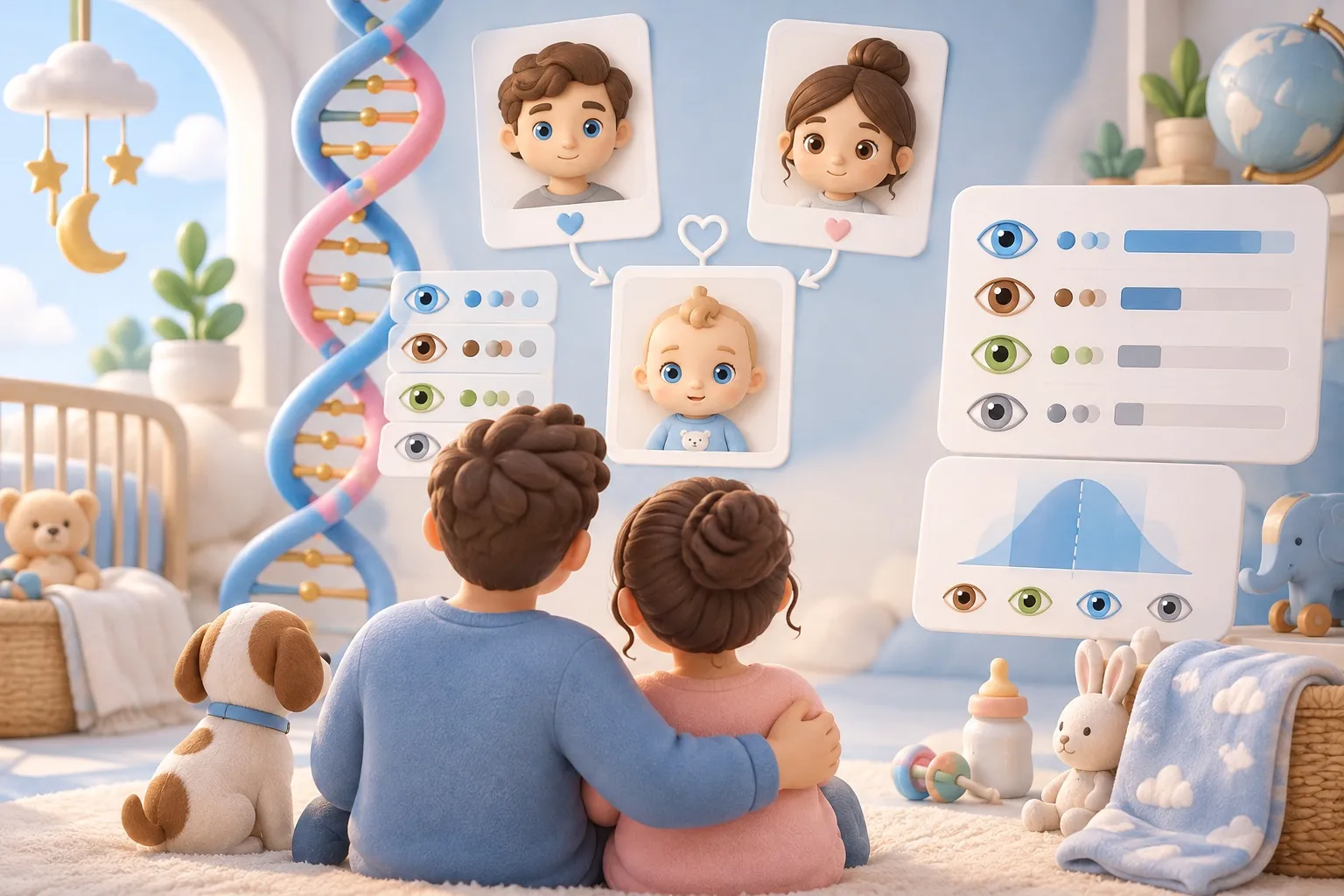
Eyes change for a different reason. The iris contains cells called melanocytes that add pigment over time. In the AAP’s explanation of newborn eye color, a little melanin gives blue eyes, more gives green or hazel, and a lot gives brown. The change is fastest in the first six months.
Parents also see the cheeks fill out in this stretch, and the face starts to look rounder and more alert as head control improves. Our separate post on when babies’ eyes change color has the month-by-month detail for eyes.
6 to 12 months: first teeth and eye color settling
The second half of the first year brings teeth and a steadier eye color. According to MedlinePlus, teething generally begins between 6 and 8 months, usually with the two bottom front teeth, then the two top front teeth. Some children show no teeth until much later than 8 months, which is usually normal for that child.
Eye color slows down too. The AAP says the color change slows after the first 6 months and that it takes about a year for the melanocytes to finish their work. The pediatrician who wrote that page says he doesn’t answer “what color will their eyes be?” until a child is at least 1.
Head shape keeps settling in the background. The soft spot at the back of the head most often closes by 1 to 2 months, and the one on top most often closes between 7 and 19 months, per MedlinePlus.
Ages 1 to 4: teeth, hair texture and a longer face
Between 1 and 4 the changes are slower but they add up. MedlinePlus says all 20 baby teeth should be in place by about 30 months, and its page on preschooler development says a typical 3- to 6-year-old grows about 2 to 3 inches and gains 4 to 5 pounds a year.
In photos, that growth shows up as:
- a mouth and jaw shaped around a full set of teeth, which changes the smile;
- a face that reads less round as the child grows taller and leaner;
- hair that may darken, lighten or start to curl. Curls often show up only after the first year; see will my baby have curly hair.
Who the child “looks like” can swing in this stage, too. Resemblance is a moving target, and the research on whether babies favor mom or dad is more mixed than the old headlines suggest; we walk through it in do babies look more like mom or dad.
The timeline at a glance
This table sums up the usual timing. Every child varies, and a pediatrician is the right person for any question about your own child.
| Age | What usually changes | Source |
|---|---|---|
| Birth to 2 weeks | Molding and scalp swelling ease; face less puffy | MedlinePlus, AAP |
| First several weeks | Skull rounds out | AAP |
| 1 to 2 months | Back soft spot most often closed | MedlinePlus |
| First few months | Newborn hair thins, then regrows | AAP |
| 0 to 6 months | Fastest eye color change | AAP |
| 6 to 8 months | First teeth, usually lower front | MedlinePlus |
| About 12 months | Eye color mostly settled | AAP |
| 7 to 19 months | Top soft spot most often closed | MedlinePlus |
| About 30 months | All 20 baby teeth in | MedlinePlus |
| 3 to 4 years | About 2 to 3 inches of height a year | MedlinePlus |
Picturing your child at 4 before you get there
No chart can tell you what your own child will look like at 4, because faces depend on many genes and plenty of chance. If you’d like to imagine it anyway, the SeeMyBaby 4-year-old preview shows the same child at age 4. It’s a one-time purchase ($4.99 in the US) made from one photo of each parent when you have them, or by ageing up the newborn portrait the app imagined from your scan.
It’s an imagined portrait for fun, not a forecast. The preview stops at age 4; there is no school-age or adult version.
Sources
- MedlinePlus (NIH): Newborn head molding, Fontanelles, bulging, Teething, Preschooler development
- American Academy of Pediatrics, HealthyChildren.org: Your baby’s head, Newborn eye color
More on looks and genetics is on the SeeMyBaby blog.
Questions parents ask
When do babies’ features stop changing?
They don’t stop at a set age. The biggest shifts happen in the first weeks and first year, eye color is mostly settled around age 1 according to the AAP, and the face keeps maturing through childhood as teeth come in and the child grows.
When do newborns start to look like themselves?
Many parents notice the change after the first couple of weeks, once birth swelling and head molding ease. The AAP says the skull usually rounds out over the first several weeks.
Can a baby’s hair color change?
Yes. Newborn hair often thins out over the first few months and is replaced by new hair, which can be a different shade or texture.
Will my baby look different at 1 year than at birth?
Usually quite different: by 1 year most babies have new hair, a settled or settling eye color, a few teeth and a less round face. Side-by-side photos from birth and the first birthday usually show the change best.